Early Years Foundation Stage (EYFS)
At CBS, The British School of Seville, we believe that the first years of life are fundamental for a child's"holistic development. The British curriculum for the EYFS stage provides the ideal framework to stimulate their emotional, physical, social, and intellectual growth in a rich, safe, and eniriching environment.
Our methodology is based on play, exploration, hands-on experience, and active discovery, allowing each child to learn at their own pace and build confidence from an early age.
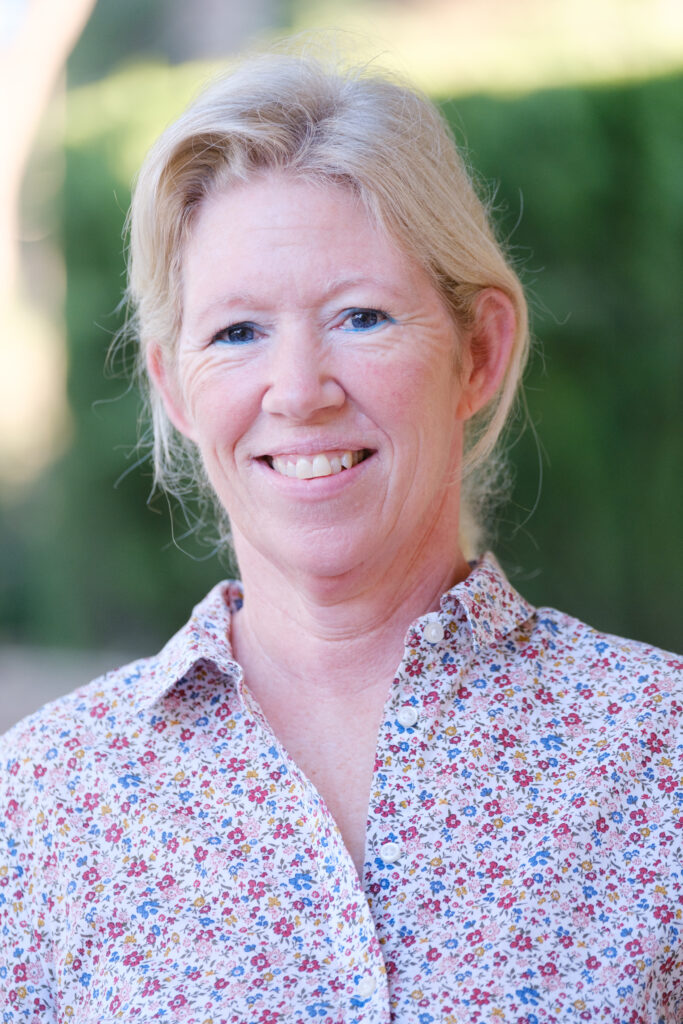
Miss Kate – EYFS Coordinator and Nursery Teacher
Two stages within EYFS: Nursery and Reception
EYFS at CBS is divided into two fundamental stages that mark the beginning of the British educational process:
Nursery
For children aged 2 to 3. This is the pupils' first contact with the British school environment. Here, free play, exploration, and autonomy are encouraged within a safe and warm space. Daily routines are designed to facilitate adaptation to the school setting and the use of English.
Reception
For children aged 4 to 5. This stage completes the EYFS and focuses on developing more structured cognitive, social, and linguistic skills. More organised activities and projects related to the British curriculum areas are introduced, always through practical and stimulating experiences.
Nurturing natural curiosity
We nourish the desire to explore and discover, supporting every child in their active learning journey.
Holistic development
Full attention to the physical, social, emotional, cognitive, and linguistic development of every child.
Respect for individuality
We value the unique interests, talents, and pace of each child to enhance their personal growth.
Nurturing and safe environment
We create a protective setting, full of affection and positive stimuli for learning.
Partnership with families
We work in close collaboration with parents, as fundamental allies in their children's educational process.
Communication and Language
We encourage active listening, oral expression, and language comprehension, in both English and Spanish, to establish a solid foundation for linguistic development.
Physical Development
Activities aimed at developing gross and fine motor skills, promoting physical exercise, coordination, and healthy lifestyle habits.
Personal, Social and Emotional Development
We boost self-confidence, empathy, teamwork, and emotional self-regulation so that children feel safe, loved, and understood.
Literacy
A progressive introduction to reading and writing, encouraging a love for books, the recognition of letters and sounds, and early written expression.
Mathematics
Exploration of numbers, shapes, measures, and patterns through games, hands-on activities, and everyday experiences.
Understanding the World
Discovering their environment, exploring nature, technology, and cultural diversity to develop a basic understanding of the world around them.
Expressive Arts and Design
Nurturing creativity through art, music, dance, and imaginative play, allowing children to express their ideas and feelings freely.
Methodology / Pedagogical Approach
Active and play-based learning
Children learn best when they are actively engaged and involved.
Guided and purposeful exploration
Teachers observe, plan challenging activities, and support discovery.
Flexible spaces and enabling environments
Indoor and outdoor areas designed to encourage curiosity and movement.
Individualised attention
We adapt the pace and resources to each child based on their unique needs and interests.
The role of play, exploration and active learning
Play is not "free time", but rather the most powerful medium for children to develop cognitive, social, linguistic, and motor skills.
They practise social skills such as communication, cooperation, and conflict resolution.
They build their identity and self-confidence.
They experiment with mathematical and scientific concepts such as weight, size, and natural cycles.
They develop language skills by narrating actions, imagining stories, and describing discoveries.
- Daily observations and recording of evidence (photos, annotations, and the child's work).
- Pupil Portfolio: a collection of work samples, progress, and interests (Learning Journey).
- Regular meetings with families to share progress and plan future goals together.
- Use of developmental scales for each area (adapted to the school’s curriculum) to monitor progress.
- Recommendations and home activities linked to classroom learning.
- Regular workshops for families on child development and shared reading.
- Regular communication via digital diaries, platforms, or personal interviews.
- Celebrations and exhibitions where children can showcase their work.
- Experienced Early Years / Foundation Stage teachers.
- Support teacher for personalised attention.
- Continuous training in innovative methodologies and wellbeing.
- EYFS Coordinator who oversees quality and acts as a family liaison.
Bright classrooms
Designed with open-ended, hands-on materials and adapted to promote movement and autonomy.
Outdoor environments
Landscaped areas, nature corners, and sensory spaces that invite discovery and free play.
Themed learning corners
Dedicated spaces for reading, art, construction, or science, tailored to the group's interests.
High-quality materials
Hands-on, natural, and recycled elements that stimulate creativity and meaningful learning.
Take the First Step Towards Their Bright Future
We invite you to visit our facilities and discover how we can nurture your child's unique potential within our British educational community.
Book a Personal Tour